I search after forms that gives associations to neurons, axons and dendrites, or to roots, branches, river deltas. I want to stretch and find my limits in three-dimensional ideation, mental rotation and carving skills.
Gulliksen, 2020



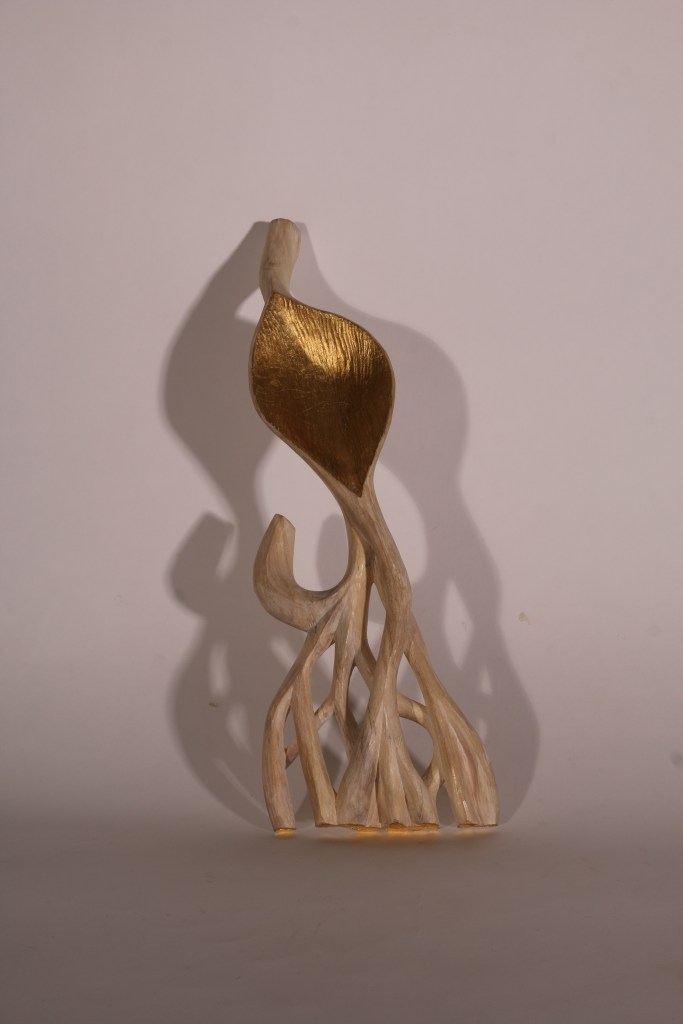
About the Purkinje Series (2015-2021)
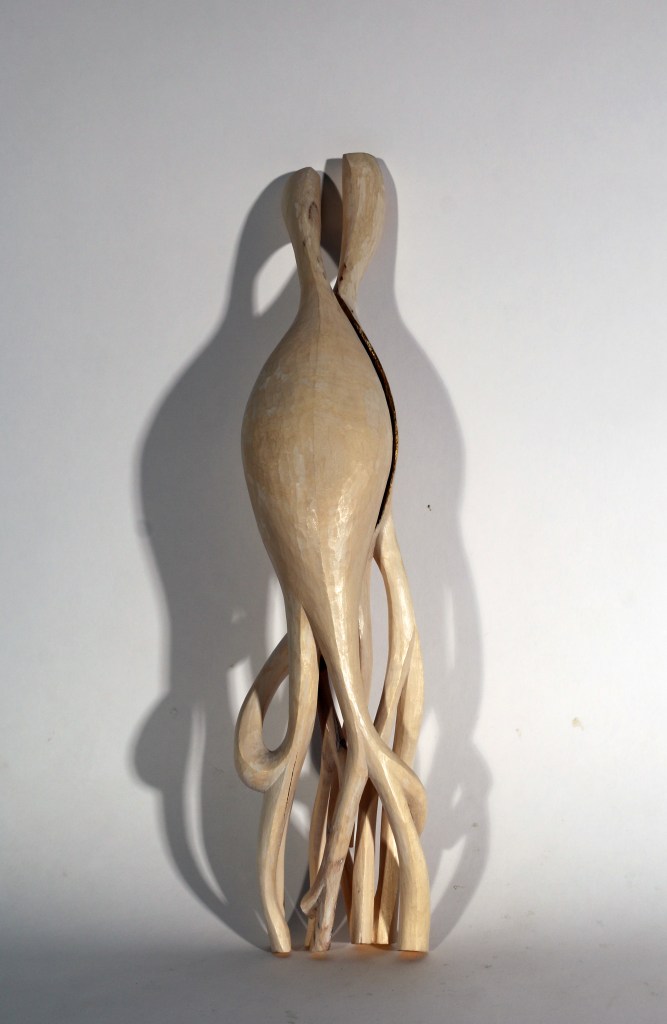
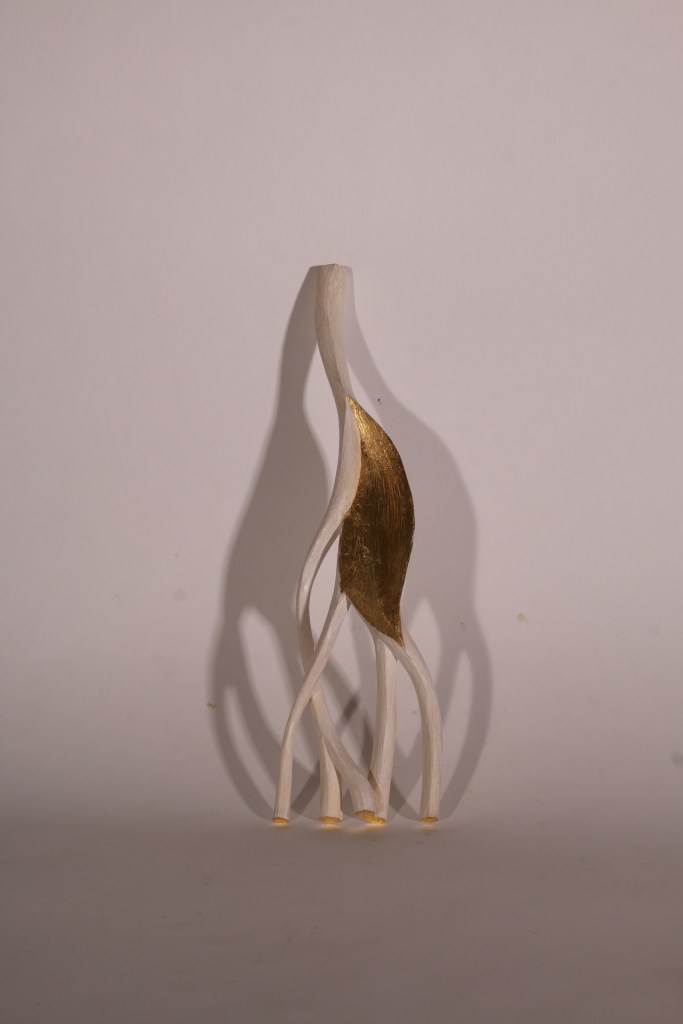
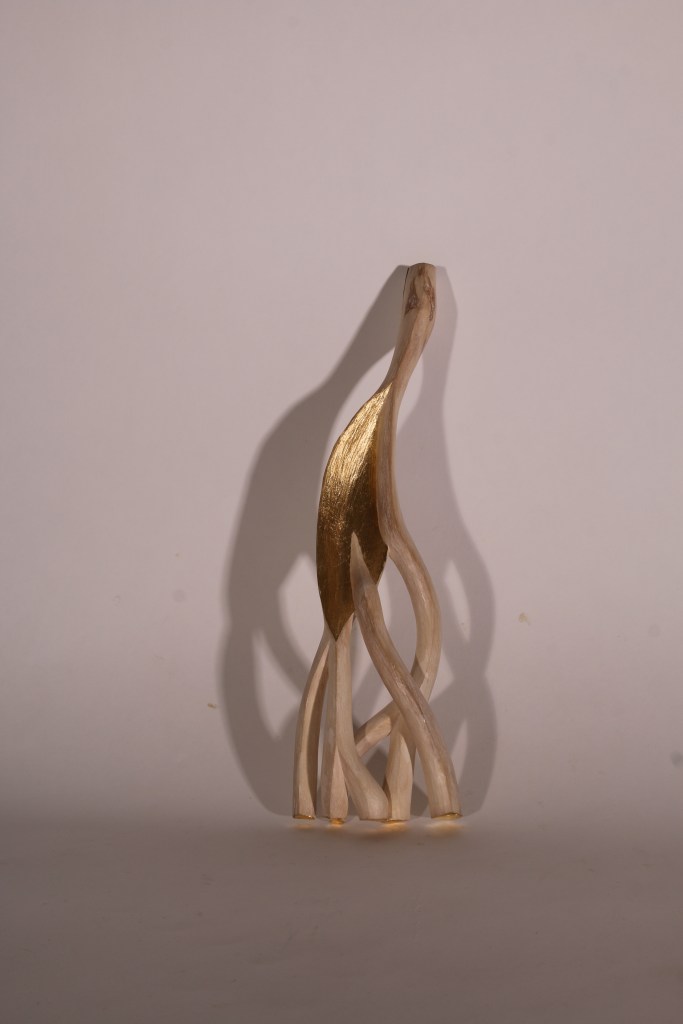
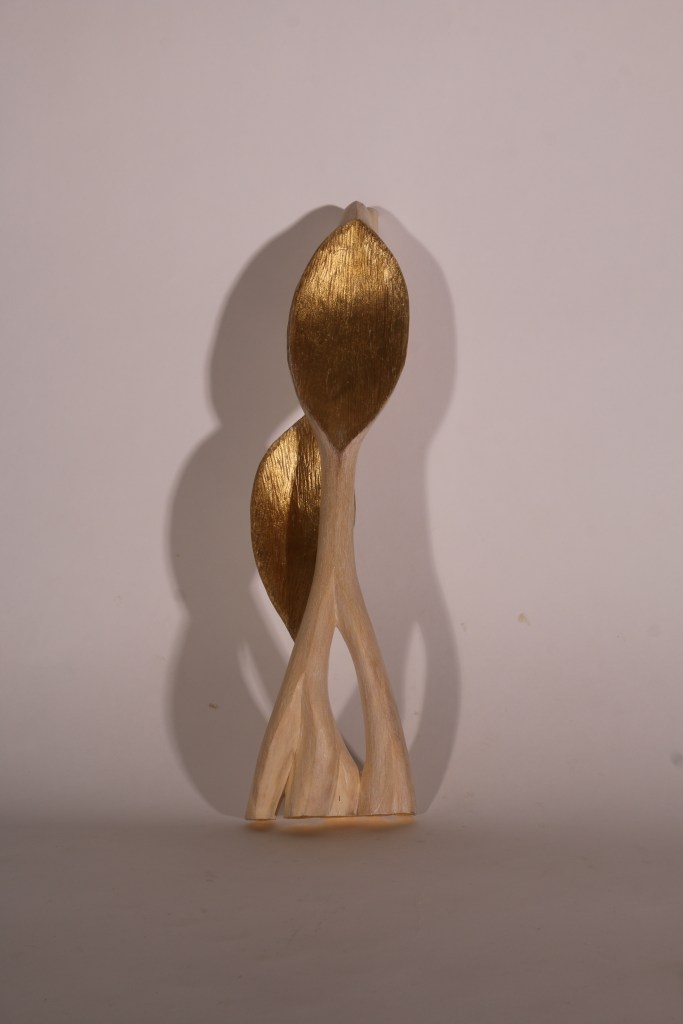
The artistic expression in the artworks is characterized by a delicately cut finished, where the aspen wood’s inner mother-of-pearl shimmer still can be seen through a gently white-waxed surface. The variation between elongated , silk-surfaced forms and hidden, golden bowls and inner spaces creates contrast and questions. Each work in the Purkinje Series are cut from one single log of aspen tree felled at Gulliksen’s farm Guvihaug in Nordagutu, Telemark, Norway. All work from log to finished artwork is made by hand tools. They are not bigger than they comfortably can be held in the arms, almost like a small child.
Some of the sculptures are in one piece. They are solid and stable. Others have multiple pieces which easily glides apart, and seem to want to fall to the floor when held. If they fall, the dry wood will splinter and fall in pieces, the entire artwork destroyed. The size and this challenge of keeping each piece together, represent how humans embraces the world and is embraced by the world, at the same time that we – by our actions – often set us apart from and above the world.
The Purkinje Series can remind us of our responsibility to take care of the world we are living with, even though it easily could slip through our fingers.
The work in the Purkinje Series is inspired from Ramón y Cajal’s drawings of the purkinje cells in a pigeon’s cerebellum.
Carving and visualizing three-dimensional form
Visualizing three-dimensional form and rotate it mentally, is a core skill for carving in wood. It is tightly connected to prior sensory experience with physical objects, memory and ideation. It is an important skill in abstract thinking, like mathematics and physics, as well as a basic skill necessary in humans’ everyday interaction and experience. In the period I worked with bowls #2-#5, I temporarily lost that ability due to a growing tumor in the brain. After surgery, I regained the ability again. This experience of losing a core mental ability is useful for experiencing underlying limitations in how three-dimensional forms are understood and visualized. The knowledge thus gained could be useful for learning sciences, and the practice of teaching in schools. Read the article presenting my journey and findings in this article:
Gulliksen, Marte Sørebø (Year: 2021), ‘There and back again: A carver’s tale of losing and regaining sense of space due to a brain tumour’, Craft Research, 12:1, pp. 127–152, doi: https://doi.org/10.1386/crre_00043_1
The collective noun I use for my sculptures is “forest”. I imagine brain cells as a dense forest where the cells live intertwined on a microscopic scale. Hidden within our skulls, they are impossible to see. Translated to a macro scale and made out of wood, they can be seen and touched. The forest facilitate curiosity, wondering and questions about what humans are, and how we experience our surroundings and ourself.
 Marte S. Gulliksen - Researcher, Artist, Teacher