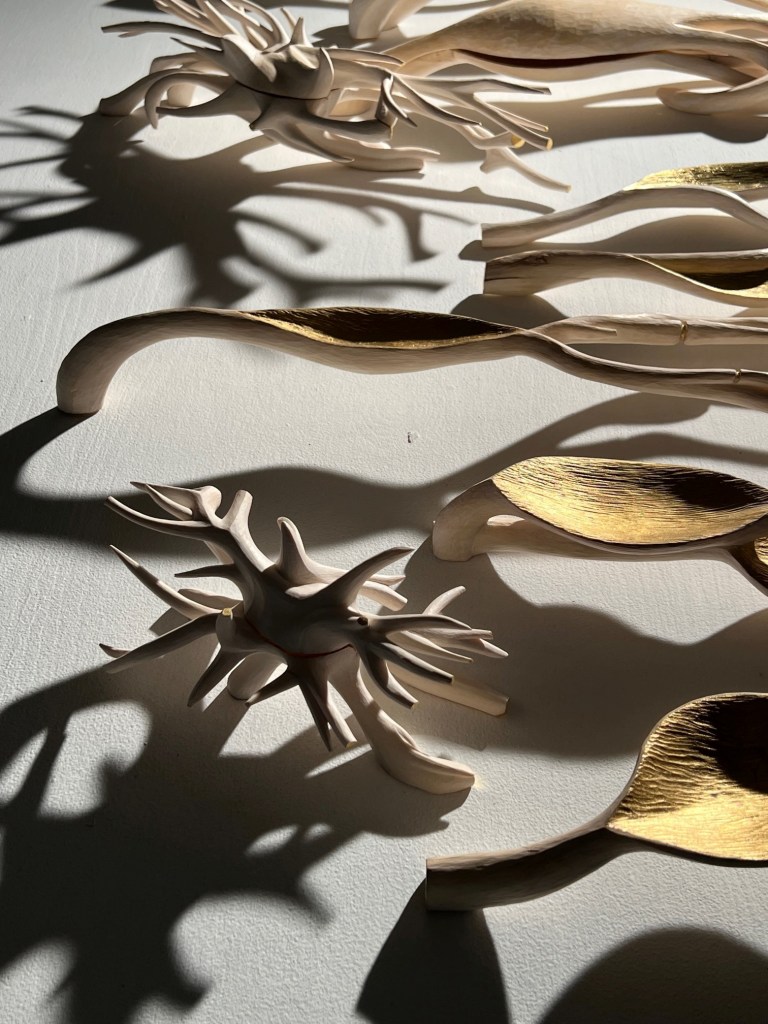
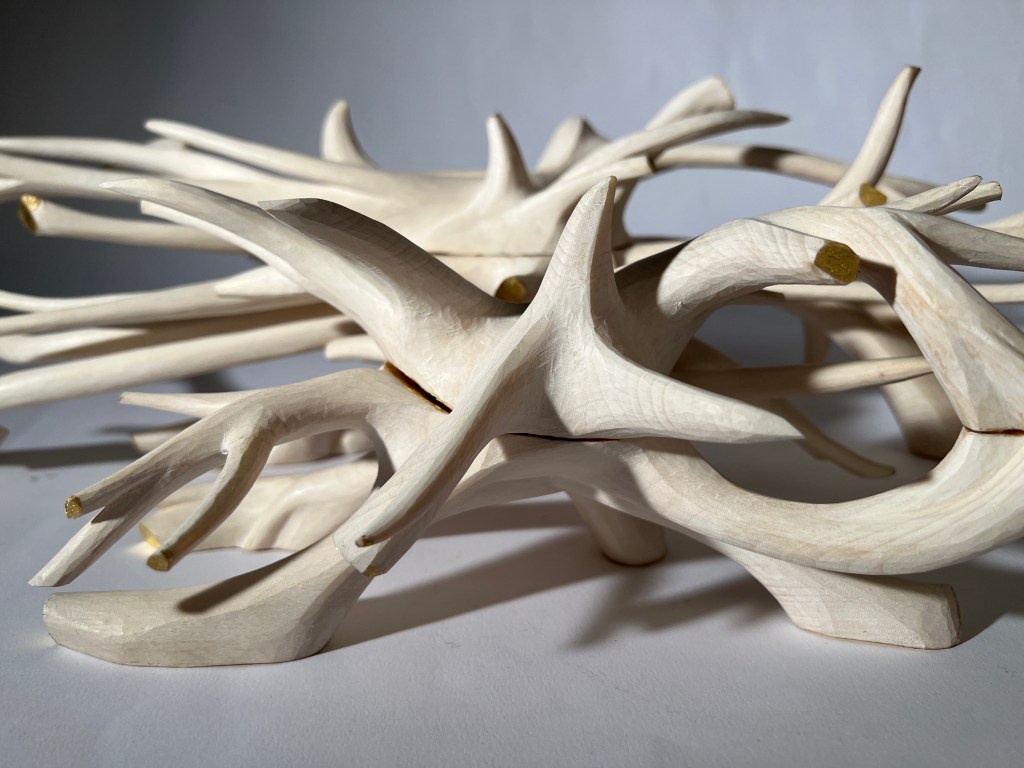
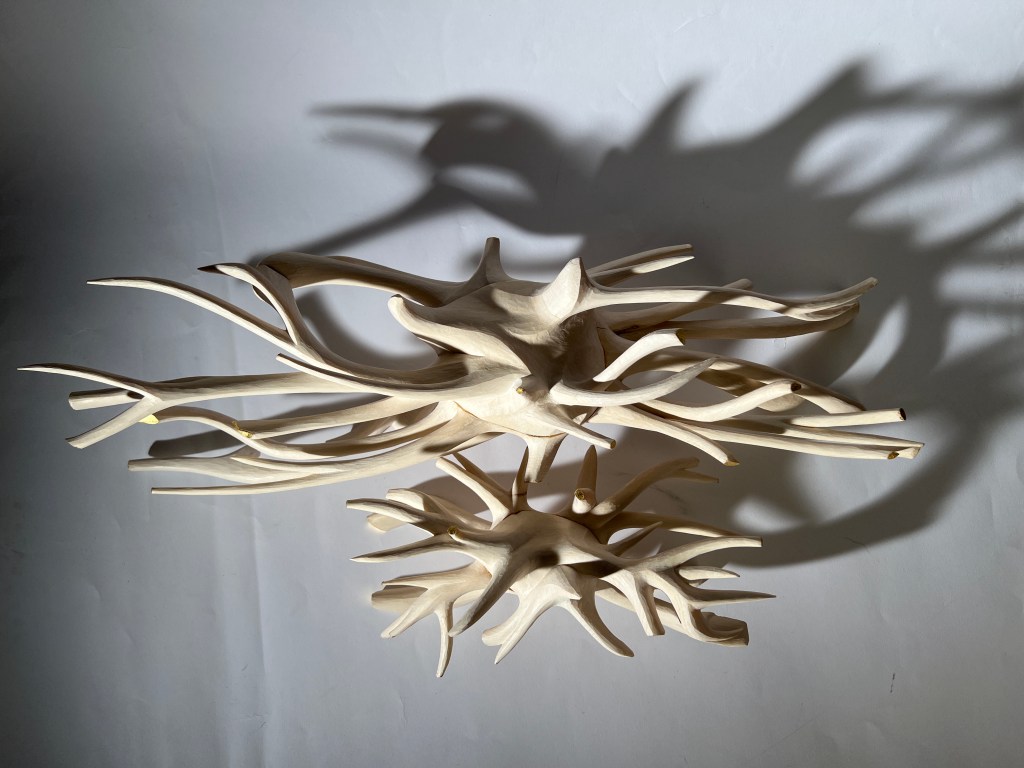
In this series I explored how to create forms inspired by the star-shaped astrocytes in aspen wood. Aspen wood is brittle and cross-grain-shapes will easily fall off. How do I go about carving such complex three-dimensional shapes out of one round log? The Astrocyte Series was a continuation of the Purkinje Series where I continued to stretch my skills in three-dimensional visualization and carving.

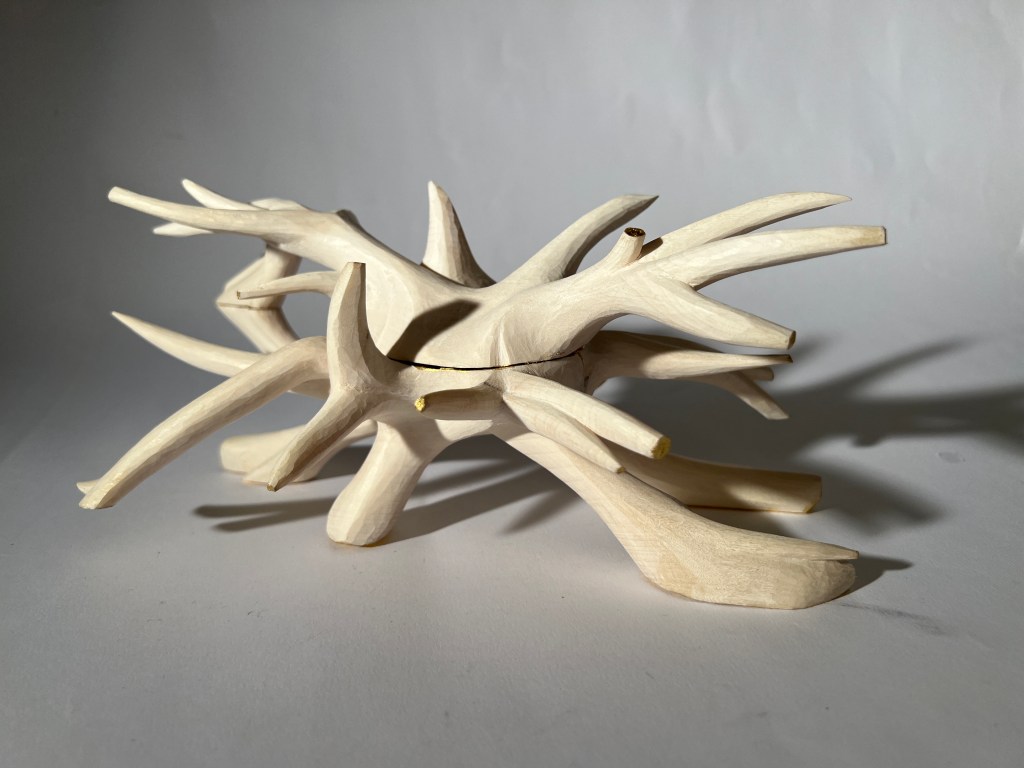
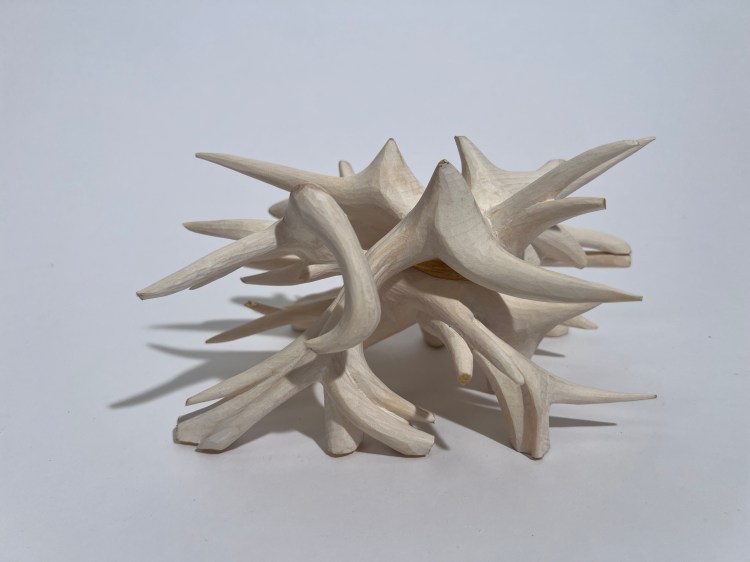
In the astrocyte series, I explored forms inspired by the star-shaped astrocytes (a glia cell in the CNS) and how they could be carved out in wood.
I did this by making sculptures in aspen wood. Aspen wood is white and even, but also brittle, with a propensity of splitting with the grain. The slow process of subtractive sculpting in the narrow window of possibilities provided by the wood grain, present extreme challenges in visuospatial ideation and mental rotation skills.
The objects in the Astrocyte Series, are much more complex in forms than the most complex object in my previous works in the Purkinje Series 2015-2021. As the star shaped astrocyte cells in our brain spreads in all directions, the objects in the Astrocyte Series similarly have end-feet striving towards all directions. Negotiating with the wood’s material affordances, some forms are not possible to make. However, illusions and approximations are possible. The overall impression of the Astrocytes suggests these star shapes and aim to make the observer wonder about how it was possible to visualize and carve out these shapes in such a brittle material.
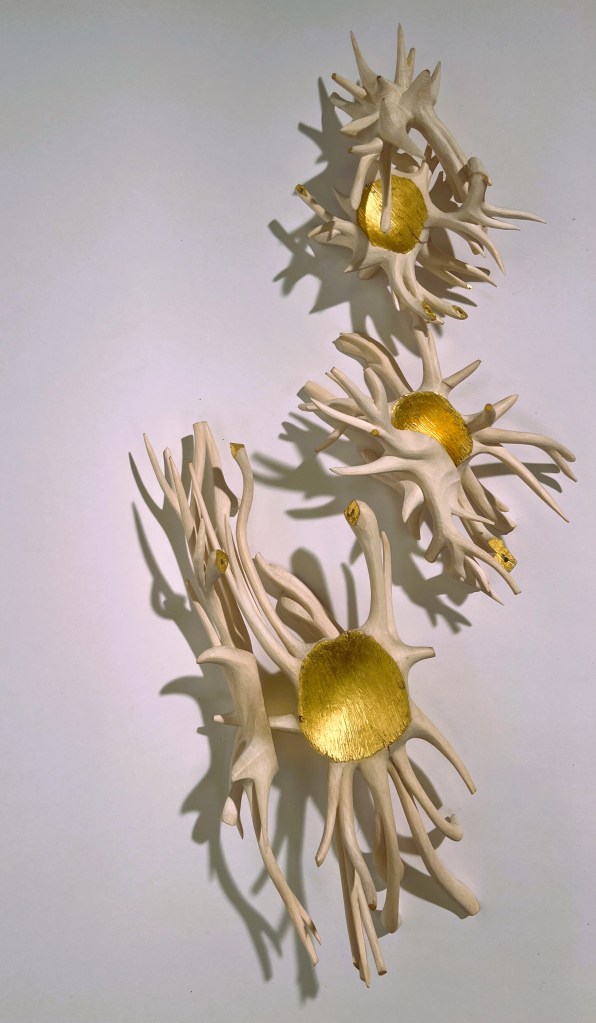
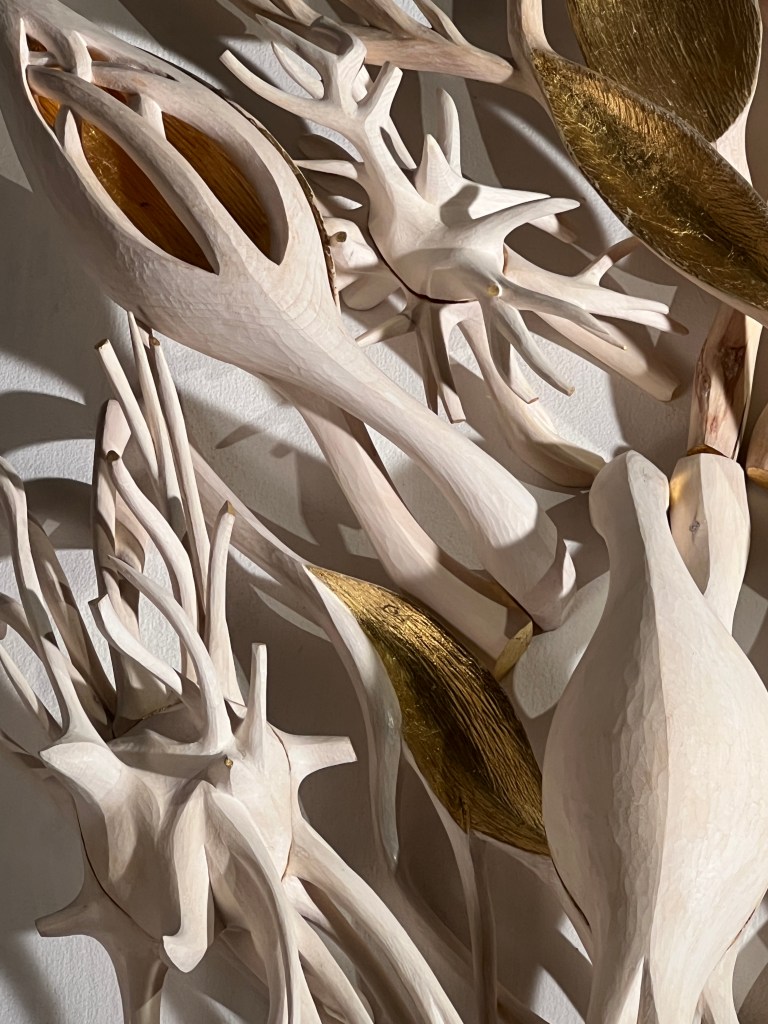
The collective noun I use for my sculptures is “forest”. I imagine brain cells as a dense forest where the cells live intertwined on a microscopic scale. Hidden within our skulls, they are impossible to see. Translated to a macro scale and made out of wood, they can be seen and touched. The forest facilitate curiosity, wondering and questions about what humans are, and how we experience our surroundings and ourself.
Group pictures of the Astrocytes


 Marte S. Gulliksen - Researcher, Artist, Teacher